Showing posts with label novels. Show all posts

Tuesday, May 24, 2011

Introducing Paul Elwork and Michelle Reale

SSM 2011: Conversation between Paul Elwork and Michelle Reale, 5.20.11

In honor of Short Story Month 2011, I thought it would be fun to chat a bit with a short-story writer I know, Michelle Reale, about her work. Michelle has published many short pieces, largely flash fiction, in a variety of journals. She has also published a chapbook of her work entitled Natural Habitat (Burning River Press); her second story collection, Like Lungfish Getting through the Dry Season, is forthcoming from Thunderclap Press in 2011, as well as another short fiction collection, If All They Had Were Their Bodies, from Burning River. Michelle’s fiction has a compressed power and clarity of language that is both arresting and often deeply unsettling. She gives us engaging characters that suggest haunted pasts and troubled futures, all with warmth that never gets sentimental and a brutal honesty that avoids cynicism.

I asked Michelle to send me several links to her work and she replied with the following stories: “What Passes for Normal,” “Shells,” “Current,” “Frantic City,” “We, the Women,” and “Three Stories": Honeymoon, Local Custom, and Bone in the Throat.” Sample through them and see for yourself the qualities I’ve listed above. And now, let’s pick Michelle’s brain a bit…

Paul Elwork: These stories are so well-rendered, reading them is a bit like paging through a book of illustrations full of shadows and striking details. Dysfunctional family dynamics run through these selections. The mother in “What Passes for Normal” is absolutely frightening in her sociopathology and ability to put a good face on things for people outside her family. Can you put your finger on what draws you to this subject matter?

Michelle Reale: I will say that if there is a flaw, I will see it before most people will. I am very shy and I have been all my life. Being shy often means that you “participate” from the sidelines. In school, people thought I was mute! But I watched very closely, always. And I listened, and still do listen, very carefully when people talk. Even in conversation there is a “text” and a “subtext,” if you will. We are all schizophrenic in so many ways. Living in polite society often means sublimating what we are really thinking and feeling. We compartmentalize our feelings, what we will say and to whom and in what context. But I can see the underside of nearly everything. And I also know that people are not always what they seem: the good aren’t always so good, and the bad aren’t always so bad. Some of my fiction will really exploit that dark side of human nature. “What Passes for Normal” was hard to write in some respects. Our society does not like flaws. We abhor what isn’t “pretty” and we shun those who fall out of the strict parameters of “normal.” I don’t even really know what normal is!

Families, too, fascinate me. What an absolutely complex relationship system. I like to explore what happens there. We can live with people our whole lives and not really know them—we are all unknowable in that way, so when I write about people and families and relationships, I am really trying to figure things out. I realize that this is not very original—I think most writers are after the same exact thing—we are writing to make sense of things. My characters are flawed, indeed. They suffer. They are not pretty. They hurt inside and then they hurt others. My job is to make them live on the page to regret it. And if I get a reaction from a reader, I suppose I have done my job!

PE: Nobody really knows what normal is. It’s one of those myths of polite society. And I like the notion of discovery you proceed with. Does anyone write really good fiction if he or she goes in with it all figured out and ends with absolutely unchanged notions?
I agree that family dynamics are an endless resource for inspiration. What informs your fiction more: Your own family dynamics, past and present, or your outside observations? Or is that too difficult to tease apart?

MR: I have to say that I am not a person who sits down and outlines or any such thing. For myself, I simply don’t see the value, most especially because for me writing is an exercise not only in creativity, but in discovery. Often, I may have an idea in my head, the way I think a piece may go, but then it goes in the opposite direction. I don’t think the writing mind is rigid—at least not for fiction. I have written an academic book in my field—now that book I most definitely had a game plan for—and I laid the groundwork very carefully. Fiction, however, is a whole different ball game, requiring more heart than mind. I don’t want to think when I write fiction—does that sound strange? But I really don’t. I want to hit bedrock of truth somehow and I can’t do that with my brain. Brain turns fiction into formula. As a reader I am turned off by that right away. As I writer, it frightens me.

My fiction is informed not so much by real incidents either in my life or the lives of others, but from impressions of incidents. How something made me feel, how it might have made others feel. I think about the fallout from messy emotional situations. Things like that. I was recently buying coffee in a Dunkin Donuts where they also have Baskin Robbins ice cream. I watched in horror as a mother practically bullied her daughter who looked to be about 10 or 11 to me into getting two scoops (“might as well,” she kept saying) instead of just one on her cone. When she relented (she had her arms crossed over her chest—a very defensive position) the mother proceeded to make fun of the fact that she’d never get a boyfriend with all of that belly fat she had around. I stood there with my mouth open. I felt an instant stab in a vulnerable place inside of me. How awful.

PE: Such a staggering, loaded moment. It’s definitely one where your guts kind of clench from the emotional impact, even as part of your mind recognizes something that applies straight to fiction. It also sounds like a moment right out of one of your stories.

MR: I went home and wrote about it. It hasn’t made its way into a story—yet, but it will surely surface somewhere. Think of all the strange (and sad) dynamics going on there. There is a truth there somewhere. And my fictional truth may not be that family’s truth, of course, but it is fiction, after all.

PE: What are your thoughts on writing in longer forms? I find it fascinating how writers are drawn to different forms, like visual artists using certain materials, or singers working in different keys. Do you have any plans for longer works or any in progress?

MR: I hear this debate a lot with writers: whether to write in longer form or not, especially if they’ve been writing short, short prose. No one ever asks a poet that question! I have long considered myself a miniaturist—even when I was writing (awful) stories that were 10–12 pages long. What I was trying, all that time (I now realize) was to get to the shorter form.

PE: Sure, that makes sense—and it isn’t a matter of right or wrong, but one of personal inclination. I remember Joyce Carol Oates writing somewhere that any literary idea can be expressed in a poem, a short story, or a novel—it’s just a question of how you want to feature it stylistically, what kind of effect you’re going for, etc. I completely agree. You’ve got to go where your interest takes you and trust that.

MR: I am more and more interested in distillation, how to use fewer words. I use Virginia Woolf as my guide and concentrate on those “moments of being”—when I can see and feel an entire world in a gesture, or the look on a face. I also work in themes. Right now I am pursuing a certificate in Peace Studies because I am interested in all of the conflicts and revolutions in the world. As a result, I am writing prose poems about my experiences abroad and my encounters with immigrant populations, fleeing turmoil in inhospitable places. I was in Sicily twice in April and witnessed the not-so-ambivalent feelings the Italian government has toward those fleeing their countries (especially North Africa) to its shores. I am Italian-American and this moved me profoundly. I had the opportunity to speak with men from various countries that have been stripped of dignity, trying to make a new life there. I saw with my own eyes the confiscated boats where they seize these people (mostly men) and detain them or make their lives miserable enough until they leave for somewhere else, other places that also don’t want them. I cannot, for instance, write a novel about something like this, because I do not have the interest in a sustained narrative about a certain number of characters. What I do have is an interest in writing many, many prose poems that I feel will be more powerful for their “staccato” succinctness and that represent a wide variety of encounters, impressions, and especially strong images. I could change some day and decide to challenge myself and write a novel, but I am not sure that I even have the capability, to tell you the truth. The intersection of prose and poetry is where I really like to be right now. In fact, I have felt more comfortable in this form than in any other. I plant my feet firmly in this place, write, and get better and better. I still have so much to learn, but I am nothing if not a very patient person!

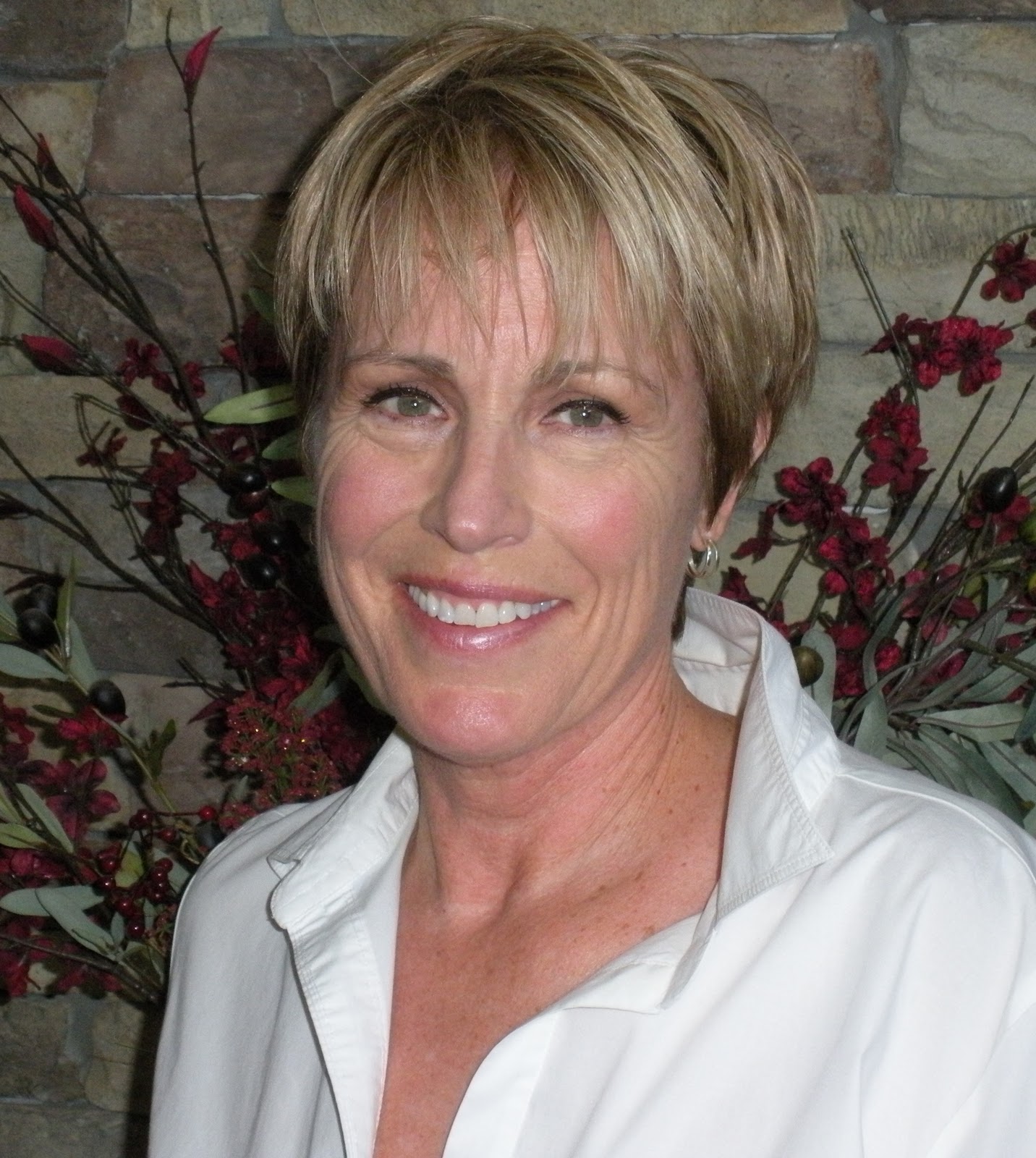
Michelle Reale is an academic librarian on faculty at Arcadia University in the suburbs of Philadelphia. Her work has been published in a wide variety of venues, including Eyeshot, elimae, Pank, JMWW, Gargoyle, Word Riot, Monkeybicycle, Moon Milk Review, and many others. Her work was included in Dzanc’s Best of the Web 2010. She has twice been nominated for a Pushcart Prize.

Paul Elwork lives on the outskirts of Philadelphia and is the father of two sons. His work has appeared in a variety of journals, including Philadelphia Stories, Short Story America, SmokeLong Quarterly, and Word Riot. His novel The Girl Who Would Speak for the Dead (Amy Einhorn Books/Penguin Group) is available online and in bookstores everywhere. For more information and links to short fiction and other content, please visit www.paulelwork.com.

Wednesday, March 9, 2011

Literary Citizenship By Cathy Day


 Cathy Day is the author of two books: Comeback Season, a non-fiction novel (Free Press 2008) and The Circus in Winter, a short-story cycle (Harcourt 2004). Her stories and essays have appeared most recently in The Millions, Fiction Writer’s Review, and Ninth Letter. She lives in Indiana and teaches at Ball State University. She blogs about novel writing and teaching novel writing at The Big Thing.

Literary Citizenship

I’ve been teaching creative writing for almost twenty years now, and here’s something I’ve observed: what brings most people to the creative writing classroom or the writing conference isn’t simply the desire to “be a writer,” but rather (or also) the desire to be a part of a literary community.

Deep down, we know that not everyone who signs up for the class or the conference will become a traditionally published writer. Well, so what? What if they become agents, editors, publishers, book reviewers, book club members, teachers, librarians, readers, or parents of all of the above?

My students attend MFA programs, yes, and they publish, yes, but they aren’t my only “success stories.” Some are literary agents; in fact, Rebecca’s agent, Michelle Brower, is a former student of mine. They subscribe to lots of literary magazines. They have founded and edit magazines, too. They’re editors. They write for newspapers and work in arts administration. They maintain blogs. They review books. They volunteer at literary festivals. They participate in community theatre. They become teachers who teach creative writing. Most importantly, they are lifelong readers.

How do I know all this? Well, there’s this thing called Facebook…

Lately, I’ve started thinking that maybe the reason I teach creative writing isn’t just to create writers, but also to create a populace that cares about reading. There are many ways to lead a literary life, and I try to show my students simple ways that they can practice what I call “literary citizenship.” I wish more aspiring writers would contribute to, not just expect things from, that world they want so much to be a part of.

Here are a few of my working principles of Literary Citizenship:

1.)   Write “charming notes” to writers. (I got this phrase from Carolyn See.) Anytime you read something you like, tell the author. Send them an email. Friend them on Facebook or follow them on Twitter. Not all writers are reachable, so you might have to write an old fashioned letter and send it to the publisher or, if they teach somewhere, to their university address. You don’t have to gush or say something super smart. Just tell them you read something, you liked it. They may not respond, but believe me, they will read it.

2.)   Interview writers. Take charming notes a step farther and ask the writer if you can do an interview. These days, they’re usually done via email. Approach this professionally, even if you are a fan. Write up questions (I prefer getting one question at a time, but some prefer getting them all at once). Let the writer talk. Writers love to talk. Submit the interview to an appropriate print or online magazine. Spread the word. There are many, many outlets, some paying. I really like the interviews published by Fiction Writer’s Review, like this one.

3.)   Talk up (informally) or review (formally) books you like. Start with your personal network. Then say something on Goodreads. Then Amazon.com or B&N. Then try starting a book review blog. Or a book review radio show, like a former student of mine, Sarah Blake. Submit your reviews to newspapers and magazines, print or online. God knows, the world needs more book reviewers. Robin Becker at Penn State and Irina Reyn at Pitt are just two writer/teacher/reviewers I know of who actively teach their students how to write and publish book reviews. Remember: no matter what happens to traditional publishing, readers will always need trusted filters to help them know what is worth paying attention to and what’s not. Become that trusted filter.

4.)   If you want to be published in journals, you must read and support them. Period. If it’s a print journal, subscribe. If it’s an online journal, talk them up, maybe even volunteer to read. One of my favorite writers, Dan Chaon, had this to say about journals: The writing community is full of lame-o people who want to be published in journals even though they don’t read the magazines that they want to be published in. These people deserve the rejections that they will undoubtedly receive, and no one should feel sorry for them when they cry about how they can’t get anyone to accept their stories. You can read his incredibly practical advice here.     

5.)   If you want to publish books, buy books. I don’t want to fight about big-box stores (evil!) vs. indie bookstores (good!) or about libraries (great!) or how truly broke you are (I know! I’ve been there, too!) or which e-reader is “better” for the writer or the independent book seller (argh!). I just want you to buy books. Period. It makes me angry to see the lengths relatively well-off people will go to avoid buying a book. Especially considering how much they are willing to spend on entertainment, education, or business-related expenses. If you’re a writer, you can file a Schedule C: Profit or Loss from a Business, and books and magazine subscriptions are tax deductible.

6.)   Be passionate about books and writing, because passion is infectious. When I moved back home again to Indiana this past summer, my husband and I set out to buy bookshelves. The first furniture store we entered didn’t even carry bookshelves, the second carried only a single type, and the third (which we bought, because they were on sale) were really intended to be decorative shelves, not book shelves. Mind you, I wasn’t really surprised by this. I grew up here, after all. If you find yourself in a literary desert, rather than fuss and complain about it, create an oasis. Maintain a library in your home. Share books with your friends, co-workers, children, and community. Start a book club. Start a writing group. Volunteer to run a reading series at your local library. Take a picture of your bookshelves and put them on Facebook. Commit to buying 20 books a year for the rest of your life.

Question: What is the secret to getting published?

Answer: Learn your craft, yes. But also, work to create a world in which literature can thrive and is valued. 

Thursday, January 13, 2011

Introducing Jessica McCann: Debut Novelist


What's Missing from My Writing
by Jessica McCann

The first book I wrote was a murder mystery. The Missing Clock features murder, suspense, a smooth-talking private eye and a surprise plot-twist at the end, Scooby Doo-style. I was eight when I wrote it.  The book was neatly bound with two staples. It also included a color illustration of the clock in question, a priceless heirloom encased in gold and sparkling gems.

My mom, a voracious reader, was my first fan and my first critic.

"I like it," she said. "But you should describe the clock instead of just drawing a picture."

It was my first lesson in the importance of revision, though I didn't know it at the time. My second lesson came years later from my high school English teacher, Mr. Churbuck, senior year. Revision, he said, was vital because it gives you a chance to add what's missing.  And there's always something missing. The only way to earn an A in his class was to turn in a minimum of three drafts with every assignment -- one handwritten, complete with scratch marks, scribbles and arrows; one typed and littered with red-inked edits; and a typed final draft, which he would inevitably litter with red-inked edits of his own. By the end of the year, I was turning in four or five drafts, stacks of edits so thick they were barely harnessed by my second-hand stapler, and reveling in the fact that the only red mark on the final draft from Mr. C was an A+.

My mom's fierce love of books fueled my early desire to write; and Mr. Churbuck's fierce devotion to the art and craft of revision is what made me a writer.

Fortunately, those influences led to the creation of my second book, a historical novel. All Different Kinds of Free reveals one woman's courageous fight for freedom during the dark period of slavery in America. I was 38 when I finished writing it. The book went through countless drafts and revisions. It received a couple semi-finalist nods as a work-in-progress and a major literary award as a completed manuscript. I had landed an agent and was on submission to publishers when I gave my mom a printout to read.

"I like it," she said, handing it back to me roughly two weeks later. "I want to read a sequel."

###
Jessica McCann, a professional freelance writer and novelist, lives with her family in Phoenix, Arizona. Her nonfiction work has been published in Business Week, The Writer and Phoenix magazines, among others. All Different Kinds of Free (Bell Bridge Books, April 2011) is her debut novel. She welcomes interaction with readers and writers at her website (www.jessicamccann.com) and on Twitter (@JMcCannWriter).

Friday, November 5, 2010

Hard Frost. Slow Dance. By Laura Munson

Laura Munson is the author of the New York Times and international bestselling memoir, THIS IS NOT THE STORY YOU THINK IT IS: A SEASON OF UNLIKELY HAPPINESS, which Book of the Month Club named one of the best books of 2010.  While the entry point to her memoir is a marital crisis, true to its title, this is a book about empowerment; about living in the present moment, and committing to being responsible for your own happiness no matter what’s going on in your life.  She has been on a national book tour with many media appearances, including Good Morning America and various NPR stations.  Her work has appeared in the New York Times Modern Love column, The New York Times Magazine Lives column, O. Magazine, Woman's Day, The Huffington Post, The Sun, Big Sky Journal and others.  She lives in Whitefish, Montana with her husband and children. 


Hard FrostSlow Dance.  

This is the time of year when the muse is hungry.  Starved by a summer in Montana where the physical world bullies you to come out into it and join the dance that leads with mountain, and twirls with rivers, and rests in lakes-- a spent tango.  And we find ourselves in fall.  The physical dance over.  Time to go home in the dark.  There is a lot of darkness now. 
            This morning was the first hard frost.  I could see it on the roof by moonshadow, silver and glinting off shingles.  It was confirmed by the first light over the ridge as I stood at the stove making my first cup of tea—the Mother cup.  The rest will be Writer cups, and there will be at least three more of them before it’s time for another Mother cup.  I drink a lot of tea.  Green with jasmine.  The muse used to be thirsty for coffee.  I taught her that tea is a more graceful entrance into the act of empathy which all writers must take if our work is to find itself dancing with our characters and our readers.  It’s easier to find empathy with tea. 
            So with tea and the first light, I go out to start the truck.  The frost has covered it and I rebel against the ice scraper which is lost under life jackets and beach towels—summer things, and I sacrifice a bit of tea to get the windshield thinking about doing its job, rock pocks and hairline fractures and all.  I am not ready for winter.  I don’t care how hungry or how thirsty the muse is to dance, in silence and dark, grey by day, and then dark again, for many months; many dark mornings with sacrificial tea rites.  I can feel myself brace against it this morning.  There is something different about this fall.
            It’s been seventeen of these in Montana and normally I meet the season and the muse with a warm embrace.  Relief, even.  I don’t know why I am dragging my feet this year to this dance I love.  It’s not that I don’t love what the muse covets; requires.  I do.  Writing is my practice, prayer, and way of life.  But it’s like what my ten-year-old son said this morning, snuggling with me.  “I don’t want to go to school.” 
            “Why?” 
            “Because there’s so much work.” 
            “But work can be fun if you look at it like an adventure.” 
            “It’s not fun when somebody asks you to do it.” 
            I smiled.  “You’re right.  But it’s possible to look at it like you get to be asked to do work, and you get to learn something you might not have thought to learn all by yourself.” 
            He wasn’t really buying it.  And neither was I.
            Yes, there is something different about this fall.  And my son helped me see it:  this is the first fall that I’ve been asked to do my work.  I have jobs.  I got a book published, finally, after many failed attempts, and suddenly…I have jobs.  In fact, it’s an embarrassment of riches, I have so many deadlines.  I’m not bragging.  It’s just that I’m worried.  I don’t know how to do this dance. 
            What I know how to do is this:  bow to winter by getting to work on a novel.  This time of year there are characters dancing in my mind’s mountains and rivers and lakes.  They want out.  They want their dance on a parkay floor in a dance hall with a live band and pretty girls and guys with gyrating hips.  They have no patience for the world of book promotion and magazines and blogs and Facebook and Twitter and books begging to be blurbed.  They don’t care if I’ve grown fond of the generous community of the internet and other writers, or that there’s finally a way that the writer can meet the reader without the publishing world.  They don’t care that I’ve learned to use Twitter as Haiku and my blog as a daily writerly warm up. 
            Most of all, they don’t understand that a writer needs an income.  That I’ve been at this years and years and finally…my dream came true.  They don’t know that once you’ve had a book published, you have a window of opportunity.  Especially, they don’t want to meet the baby being passed lovingly through it.  They are jealous lovers.  Sabateurs of other dance halls but their own.  They want to sweat and grind and tip back their heads in pleasure.  They want to feel the drumbeat re-arranging their heartbeats.
            And I fear that the work I have loved so much for so long, will somehow suffer.  And in-so-doing, I will too.  Never mind my muse or my characters.  Or potential readers for that matter.
            When I return from the Mother cup of tea, the sun bright, the yard is a puzzle-- bright green where the frost has melted, still stiff and sage-colored where it has not, a perfect shape of the shadow of my house.  I pause and smile:  nature’s dance. 
            The dance is perpetual, I decide.  The characters aren’t leading the dance.  I am.  My work is to keep writing and trust that I’ll know which dance it is to dance.  Now tango.  Now foxtrot.  Now waltz.
            I can bring these cups of tea, these yard shapes, these characters, and even my muse with me, wherever I am dancing.  And we will all be better for our other writing adventures.  No one will go hungry or cheap for the drum beat.  It is just slow for now in the way of novels.  I’m sure that winter will change that soon enough. 

Monday, October 25, 2010

Birthing a Book by Heather Newton

Heather Newton is a writer, attorney and mediator in Asheville, NC.  Her novel Under The Mercy Trees, about a man forced to face his troubled past when he returns to his small hometown in the mountains of North Carolina after the disappearance of his brother, is available for pre-order now from Amazon.com and other online retailers, with information at http://www.heathernewton.net/.

Birthing a Book
By Heather Newton
          I’ve been thinking lately about how getting a book published is like birthing a baby.

First, there’s the getting pregnant--or not getting pregnant--part. Some people conceive the month they decide to start a family. That didn’t happen for me. My husband and I tried for over a year and had actually scheduled an appointment with a fertility specialist when, hooray, I finally got the little “+” sign on a home pregnancy test. The fact that it took us so long caused anxiety and despair–was it ever going to happen? But it also gave us time to think and plan and be sure that having a baby was what we wanted to do.

Likewise, I didn’t find an agent and publisher for my novel the minute I finished it. An embarrassing number of agents told me (if they responded at all) that they just couldn’t feel “enthusiastic enough” about my book to take it on (I’m convinced they learn that phrase at agent school). Then the “+” arrived: my agent offered representation and placed the book with HarperCollins. In the nearly three years that passed between finishing the novel and selling it, I despaired that I would ever see it in print. That three years, though, gave me time to complete a short story collection and decide that yes, even without success, I still wanted to write.

The gestation phase for books and babies is also similar. Seeing the book cover for the first time was as exciting as looking at an early ultrasound. Holding the advance copy gave me the same thrill as feeling my baby kick and realizing she was alive and real. When the first reviews came out--people other than me talking about the novel–it reminded me of that magical point in my pregnancy when I suddenly showed and other woman began to come up to me to share their stories and my anticipation.

Now I’m feeling the way I felt toward the end of my third trimester. You know how it is, ladies–big as a bullfrog, having to pee every two minutes, out of breath walking to the mailbox. By the time my daughter was two weeks overdue I was drinking herbal teas and begging my massage therapist to find a pressure point that would send me into labor. What finally worked was going to see a Star Trek movie with my mom and sister and sitting right next to the speakers in the theater–the bass was so loud it shook that baby right out.

My novel, Under The Mercy Trees, comes out January 18, 2011, and I’m ready. I’ve picked a name, painted the nursery, packed the overnight bag. There’s nothing left to do but wait, and since this baby is fully formed and has all its fingers and toes, I think I’ll even settle in and have a glass of wine.

Thursday, October 21, 2010

Hospital Stay Sparks Creativity or An Unexpected Gift from Post-Op


After a lifetime spent in the field of Human Resources, I’m now pursuing my dream of writing. I’ve done some freelancing, and my first novel, Dakota Blues, is almost ready to go. It’s about a woman who is forced to realize, as she turns fifty, that she’s been sleepwalking through her one precious life. You can find me at http://anyshinything.com 


Hospital Stay Sparks Creativity
or
An Unexpected Gift from Post-Op
by Lynne Morgan Spreen
         
Some writers will do anything to improve their creativity. I recommend surgery.
         Kidding! But let me explain. In the past five weeks I’ve been traveling a rough stretch. I’m back from the hospital now, but something strange and wonderful happened while I was hanging around in post-op.
         I got creative.
         Ideas poured into my head as easily as the saline from the IV drip. Ideas for characters, conflict, motivations, and story arcs appeared as if by magic. Some of it was inspired by the real people I met on my daily walks, as I dragged my IV tower up and down the hallway between Unit 9200 and Bariatric Medicine. But much of it was organic: original, whole characters, names and backgrounds sprang from somewhere in my subconscious and presented themselves to me as I drifted in and out of wakefulness. And I took notes, because I am such a dork that I brought my pen and tablet to the hospital with me. The name, age, vague appearance, general circumstances and motivations of a character would appear in my semi-conscious, and then when I was more alert, I would grab my pad and start writing, filling in the empty spaces.
         Here was one of the most profound and enjoyable aspects of this behavior: you know when you’re first starting to write a work of fiction you develop a list of character attributes? In the past that has been such a chore for me because it seemed so arbitrary. Where did the character go to high school? What kind of car does she drive? Who cares?
         But in the hospital, I found that I could sit with a character and let her tell me the deep stuff: the reasons why she does what she does. Why she’s starving for attention, even if it’s bad. How she copies the movements of her supervisor at a business luncheon, carefully folding her napkin just so, basking in the thinnest compliment. I was able to get to know my characters as if they were real people.
         Was it the drugs? Maybe, but I wasn’t taking anything that exciting. I think it was the amount of sleeping I did, and the distance from my normal frenetic life.  In other words, I rested. What a concept! With rest, creativity bloomed. With rest, humor and clarity surfaced.
         Here’s why this should matter to creatives: we may unknowingly have deep reservoirs of creativity sitting inside us, inaccessible because we’re always speeding around. When there is too much noise up top, too many layers of “gotta hurry, gotta do” might prevent the beautiful, original thoughts from getting through.
         I’m pretty excited about this discovery. It may be that I have a whole lot more creativity inside me than I ever guessed, and I intend to harvest it. Since I’ve returned home I’ve been taking it easy, because I need to heal, but I hope never to return to that frantic pace again. Even before my pace picks up again, I’ve been practicing the art of resting, and I plan to continue after normalcy returns. I WILL take ten minutes here or twenty there to sit in a comfortable chair and just listen. I’ll let my thoughts roam while I focus only on the sounds around me, and the only rule is that I cannot pursue any thoughts.
         You’re too busy? I understand. Martha Beck, in a recent issue of O Magazine, offers a quick strategy for resting, here (http://www.oprah.com/spirit/Strategies-for-Mental-Rest-and-Relaxation-Martha-Beck-Advice). Yes, it’s more than just going somewhere quiet and closing your eyes, although that may be enough.
         Call it meditation, call it an awake-nap, it’s at the heart of mindfulness. If you can take ten minutes to awake-nap, I predict you’ll feel better. You may even see things more clearly. Even if it doesn’t enhance your creativity, it just might prevent you from sleepwalking through your one precious life.

Tuesday, September 21, 2010

The Importance of Community


Susan Henderson’s debut novel, UP FROM THE BLUE, will be published by HarperCollins on September 21st, 2010. (That's today, folks!) She is the recipient of an Academy of American Poets award and grants from The Ludwig Vogelstein Foundation and The Lojo Foundation. Her work has — twice — been nominated for a Pushcart Prize. Publications include Zoetrope, The Pittsburgh Quarterly, North Dakota Quarterly, Bellevue Literary Review, South Dakota Review, The MacGuffin, Arkansas Review: A Journal of Delta Studies (nominated for a Pushcart Prize, 2004), North Atlantic Review, The Green Hills Literary Lantern, Opium, Other Voices, Amazon Shorts (nominated for a Pushcart Prize, 2006), The World Trade Center Memorial, The Future Dictionary of America (McSweeney’s Books, 2004), The Best American Non-Required Reading (Houghton Mifflin, 2007), Not Quite What I Was Planning (HarperPerennial, 2008), and Online Writing: The Best of the First Ten Years (Snowvigate Press, 2011). She blogs at http://www.facebook.com/l/4d2ddMA7h54NYvNQgJwG82ddkNg;LitPark.com, and The Nervous Breakdown. Her husband is a costume designer, filmmaker, and tenured drama professor. They live in NY with their two boys.

Buy Her Novel On Amazon: -http://www.facebook.com/l/4d2dd8BpF9iNgTBe3WijCXSZyKQ;www.amazon.com/Up-Blue-Novel-Susan-Henderson/dp/0061984035


The Importance of Community
by Susan Henderson

Today is the launch of my debut novel. It’s been a long journey—about six years since I decided I had a novel in me, and twenty years since I graduated with a degree in Creative Writing and a collection of awards that made me think this road might be easy.

To my non-writer friends, these numbers are utterly ridiculous. In any other field, numbers like these send a very clear message: You don’t have what it takes. You must not have anything important to say. What you call your “career,” others call “unemployed.”

This is why a community of writers is so invaluable. Because there’s nothing logical about this field. We are trying to tell our stories even when it hurts to write them, even when the rejection is devastating, even though we are paid nothing along the way, even when we can’t be sure our stories will ever be accepted for publication. We’re in this for reasons we may not even understand.

In my six years of trying to write, revise and sell this novel, I’ve had so many reasons to give up, and it’s you guys, my fellow writers, who’ve carried me here. So let me say thank you for the company. For believing I had something to say. For encouraging me to send out my manuscript. For helping me shake off the rejection. For standing by as my revisions began to unravel the story. For believing I could get it right. For telling me hard truths and beautiful lies. For pushing me to take risks and create bolder art. Thank you for being glad for me even as you are still waiting for your own validation in this field.

I have a book coming out this week because of you, and I’m profoundly grateful.

Sunday, August 8, 2010

Again by Robin Antalek

Robin Antalek is the author of The Summer We Fell Apart (HarperCollins 2010), chosen as a Target Breakout Book.  Visit her website at www.robinantalek.com.
She also blogs at www.robinantalek.blogspot.com and thenervousbreakdown.com. You can find her on Facebook, too.

Again
By Robin Antalek

I thought it would be easy.  Well, perhaps easy is the wrong choice of words.  Maybe a different kind of easy. After all I managed to get a book published.  Pretty awesome reviews.  Target Breakout Book.  Book Clubs can’t get enough.  Close to eight months after publication I’m still getting interview requests and book club visit requests and showing up at bookstores for signings.

Still. There is that nagging voice of self-doubt.

Will I be able to do it again?

It wasn’t like The Summer We Fell Apart was the first novel I had ever written.  I got my wonderful agent Julie with a book that we both really loved – but didn’t end up selling.  Before Julie, I had written three other novels and a short story collection.  The stories had won a prize and publication by a regional publisher.  I had written PR and grants and radio scripts – anything to keep me in printer ink.  So writing really wasn’t the problem.

So I thought.

When I was nine, my parents’ gave up our very traditional life in Manhattan to move to a slip of a town on the west coast of Florida near the Everglades. This was 1970 and the landscape was akin to the Wild West.  My dad, an engineer, who had a hand in designing the mini cars that would become Matchbox, decided to give it all up to run a pool company.  Yes, I am very familiar with the smell of chlorine and what it takes to get garden snakes and the occasional rattler out of a pool filter.

Ten years later I left the Everglades to go north to school and really never looked back.  Twenty years after I did my parents eventually migrated back to a bedroom community within a train ride distance to Manhattan.

But those ten years stayed with me.  The stories and the people and atmosphere of old Florida is in my blood.  I have attempted two novels since The Summer We Fell Apart.  Both about this Florida – my Florida.  Both were disastrous.  I knew something was wrong with each of these books – but I couldn’t see it.  This is a world I know so well – maybe too well and that was part of my problem.

I took the best parts of the first manuscript and wrote the second.  Still, something wasn’t right.  I didn’t have that magical voice that grabbed me, compelled me to tell a story.  I had half a voice.  It was a whisper.  But it was something.

So I had a conversation with my agent.  A long, wonderful, winding conversation between friends.  Wonderful Julie listened while I rambled and all of a sudden IT was there.  The story I wanted to tell.  The whisper grew louder and louder until I could no longer ignore it.  It’s a beginning.  The bare bones of a beginning.  Day by day, hour by hour, the story is taking shape, the voice I was straining to hear is practically screaming.  It’s time to get back to work.  And it feels so good.

"These are the days when Birds come back/a very few/a Bird or two/to take a backward look."

"These are the days when Birds come back/a very few/a Bird or two/to take a backward look."